
Robert Berman, MD
Shahzaib Ali Shahzaib Ali

Robert Berman, MD

Dr. Robert Berman first discovered the antidepressant effects of ketamine in humans alongside Dr John Krystal in 1990s at Yale. For over 20 years he has worked within the industry, first at Pfizer and then Bristol-Myers Squibb in clinical development roles, including leading the program for aripiprazole in depression, for which he developed novel clinical trial design that achieved three out of three highly statistically significant trials. In 2013, Rob co-founded Biohaven Pharmaceuticals (NYSE:BHVN) and was Chief Medical Officer until 2019.

Read More
Dr. David Hough
Shahzaib Ali Shahzaib Ali

Dr. David Hough

David Hough, MD is the Chief Medical Officer at Freedom Biosciences. Prior to joining Freedom, Dr. Hough spent 17 years  in various leadership roles at Janssen Research and Development, LLC (a Johnson & Johnson company). Most recently, he was the leader of the compound development team working on Spravato (esketamine). In this role, Dr. Hough oversaw the program through the development of novel indications for two severe mood disorders, and was responsible for all the medical, scientific, manufacturing, quality, preclinical, and commercial aspects of the program.

He also worked as the schizophrenia disease area leader, and led the development team for Paliperidone, a leading drug used to treat schizophrenia and schizoaffective disorder. He played a pivotal role in the development programs for oral INVEGA (paliperidone), INVEGA SUSTENNA/XEPLION (paliperidone palmitate) 1-month and 3-month formulations.

Dr. Hough is a graduate of West Point and served for several years as a regular Army officer, before earning his MD at the Uniformed Services University of the Health Sciences (USUHS) in Bethesda, Maryland, where he later held an Adjunct Assistant Professor of Psychiatry position. After completing residency training in Psychiatry at Walter Reed Medical Center in Washington, D.C., he completed a two-year research fellowship in Clinical Pharmacology jointly sponsored by USUHS and Walter Reed Army Institute of Research. Dr. Hough served for 10 years as an Army psychiatrist at two community hospitals and on faculty at a psychiatry residency program in Honolulu, Hawaii, and is board-certified in both Adult and Geriatric Psychiatry.

He has authored numerous publications in peer-reviewed journals, is a reviewer for several journals, and served as an examiner for the American Board of Psychiatry and Neurology.

Read More
Dr. Alex Kwan
Shahzaib Ali Shahzaib Ali

Dr. Alex Kwan

Alex Kwan is a neuroscientist whose work is focused on the neurobiology of antidepressants. He is known for using sophisticated optical imaging methods to show how drugs such as ketamine and psilocybin modify the structure and function of brain circuitry. His research has been published in top peer-reviewed journals including Nature Neuroscience, Neuron, and Biological Psychiatry. He has a Ph.D. in Applied Physics from Cornell University and is currently an Associate Professor in the Meinig School of Biomedical Engineering at Cornell University.

Read More
Dr. Gerard Sanacora
Shahzaib Ali Shahzaib Ali

Dr. Gerard Sanacora

Dr. Gerard Sanacora is the George D. Gross and Esther S. Gross Professor of Psychiatry at the Yale University School of Medicine, Director of the Yale Depression Research Program, and Co-Director of the Interventional Psychiatry Program at Yale-New Haven Hospital. For the past 25 years his research has focused using both preclinical and clinical studies in attempts to expand our understanding of the pathophysiology of mood disorders and to use this information in developing new approaches in treating mood and other neuropsychiatric disorders.
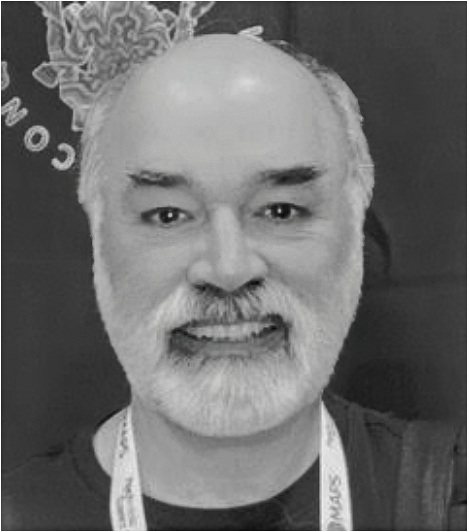
He has served as PI on numerous NIH, foundation, and industry sponsored studies in the area of mood disorders research ranging from rodent models of stress-related pathogenesis, to mechanistic neuroimaging studies introducing novel magnetic resonance spectroscopy methods, to large phase III clinical trials. At multiple levels these studies have all helped highlight the role of the amino acid neurotransmitter systems in relation to mood disorders and contributed significantly to the development, testing, and actual clinical use of novel treatment approaches such as recent approvals of esketamine (SPRAVATO®) and brexanolone, (ZULRESSO™).

Most recently his work has expanded to program development and implementation science in attempts to efficiently and cost effectively bring these nascent, neuroscience informed diagnostic and treatment approaches to clinical practice. These efforts have included working closely with other investigators, industry sponsors and even third party payers to optimize the design, coordination and participation in late stage clinical trials examining effectiveness and safety of novel treatment approaches in “real world” patients such as those considered at imminent risk of suicide who would historically be excluded from any clinical participation. He has also devoted much effort recently to educations and dissemination efforts, providing leadership to consensus statements and national educational efforts relating to the clinical utility and concerns associated with these novel therapeutic options.

Read More
Frank Menniti, Ph.D.
Shahzaib Ali Shahzaib Ali

Frank Menniti, Ph.D.

Frank S. Menniti, Ph.D., is a neuropharmacologist with BioPharmaWorks, LLC and a Ryan Research Professor of Neuroscience and Adjunct Professor, Department of Biomedical and Pharmaceutical Sciences, in the College of Pharmacy at the University of Rhode Island. Prior to this, he served as Founder and Chief Science Officer of MindImmune Therapeutics, Inc., a drug discovery company focused on developing immune modulators to treat diseases of the mind and brain. Prior to MindImmune, He was the Founder and Chief Scientific Officer of Mnemosyne Pharmaceuticals, Inc. developing subunit-selective NMDA receptor modulators. Mnemosyne partnered a GluN2B New Approach Methodology (NAM) for depression with Novartis and Novartis fully acquired this asset as well a second Mnemosyne asset, an NMDA receptor PAM for schizophrenia, through the purchase of Cadent Therapeutics, which developed small-molecule therapies to modulate brain rhythms for treating movement and cognitive disorders. Before founding Mnemosyne, he served as a Research Fellow in the CNS Discovery group at Pfizer in Groton, where he played a key role in developing the scientific rationale for NMDA receptor GluN2B antagonists as therapeutics for stroke, neuropathic pain, Parkinson’s disease, and depression, as well as in the clinical development of the prototype GluN2B antagonist CP-101,606. He also contributed to the development of phosphodiesterase inhibitors for neuropsychiatric disorders. This includes the identification of PDE10A inhibitors for schizophrenia and Huntington’s disease, with the first PDE10A inhibitor to reach Phase II development, the first PDE9A inhibitor into Phase II testing for the treatment of Alzheimer’s disease and the first PDE5A inhibitor into Phase II testing to improve functional recovery after stroke. After receiving a Ph.D. in Pharmacology from the University of North Carolina, Chapel Hill in 1987, served as Staff Fellow in the laboratory of Dr. James W. Putney at the National Institute of Environmental Health Sciences, participating in research elucidating the fundamentals of intracellular calcium signaling.

Read More